
Categories
Diablo 4

Complete Guide to Silent Chest Locations in Diablo 4 Season 12

In Diablo 4, not all loot containers are created equal. Among the many treasure sources scattered across Sanctuary, Silent Chests stand out as a unique and often overlooked opportunity to earn valuable rewards, including Diablo 4 Gold and powerful Diablo 4 Items. Understanding how these chests work, and more importantly, where to find them, can significantly improve your efficiency during Season 12.

What Are Silent Chests

Silent Chests are special locked containers found exclusively in the open world. Unlike regular chests that you can open instantly, these require a Whispering Key to unlock. Without a key in your inventory, you won’t be able to interact with them at all.

Visually, Silent Chests are easy to recognize once you know what to look for. They are wrapped in glowing golden chains, making them stand out from standard wooden or iron chests. However, despite their distinct appearance, they are often missed because of their placement.

These chests never appear inside dungeons or instanced areas. Instead, they are hidden throughout the overworld, typically along walls, cliffs, or tucked beside environmental obstacles. Their off-path positioning means that players rushing through zones often ride right past them.

General Spawn Behavior

While Silent Chest locations rotate, their regional spawn zones remain consistent. This means you won’t find them in fixed coordinates, but you can reliably search specific areas where they are known to appear.

Because of this semi-random system, efficient routing is key. Instead of wandering aimlessly, players should focus on high-probability zones and follow optimized paths to maximize their chances of finding a chest quickly.

Fractured Peaks Locations

Fractured Peaks is one of the most active regions in the game, which makes Silent Chests here harder to find simply because other players often loot them first.

Gale Valley: This is one of the fastest zones to check. Its compact layout allows for a full loop in under two minutes. The chest frequently appears near the southern entrance where the path narrows.

Frigid Expanse: A much larger area where chests tend to spawn near northern cliffs. Stick to the perimeter rather than crossing the center to improve efficiency.

Desolate Highlands: Easily accessible from Nevesk, this zone often features spawns along the eastern side of the main road, especially near ruins or rock formations.

If you’re starting your session, checking Fractured Peaks early can give you an advantage before other players clear the area.

Kehjistan Spawn Areas

Kehjistan’s desert terrain can make Silent Chests harder to spot, but it offers a major advantage: lower player traffic.

Caldeum: Look beyond the main city routes. Silent Chests typically spawn in outer districts, especially near side alleys and the eastern gate.

Scouring Sands: Focus on the northern section near clusters of ruins. The sandy environment can obscure the chest’s glow, so move carefully and keep your camera angled for better visibility.

Because fewer players farm these areas, chests here often remain available longer, increasing your chances of success.

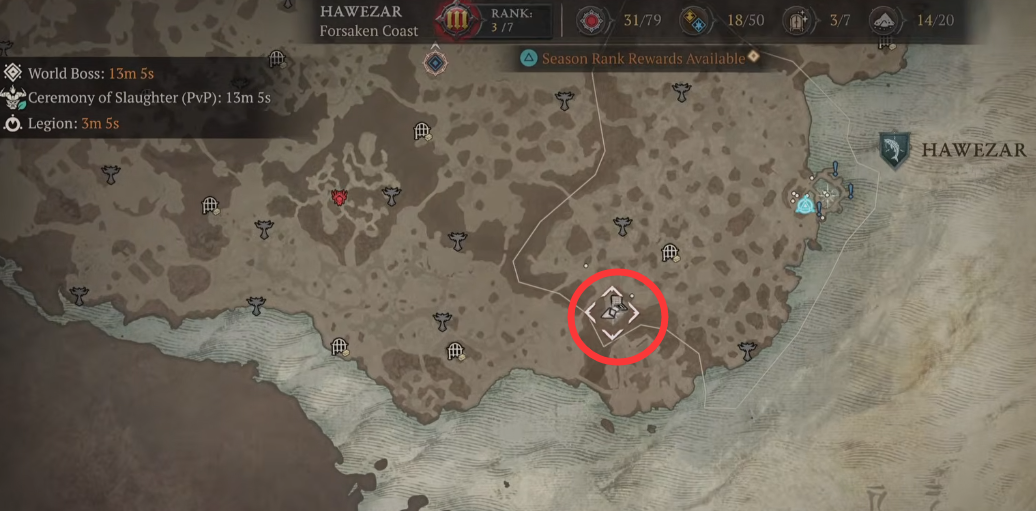
Hawezar Farming Spots

Hawezar is another excellent region for Silent Chest hunting due to its relatively low population.

Fethis Wetlands: This is one of the most reliable zones for finding untouched chests. Look along water edges and small elevated patches within the swamp.

If you’re searching mid-session and struggling to find a chest elsewhere, Hawezar is a strong fallback option.

Dry Steppes Community Discovery

One of the most consistent Silent Chest spawn points discovered by the community in Season 12 is located in the Dry Steppes.

North of the Bear Tribe Waypoint: This elevated rocky area has been widely reported as a reliable spawn location. Because it sits slightly off the main road, many players overlook it.

Community reports suggest a high success rate when repeatedly checking this spot, making it one of the best targeted farming locations this season.

Helltide Zones: The Best Opportunity

If you want the highest chance of finding a Silent Chest, Helltide events are your best bet. These time-limited events naturally encourage players to explore large portions of the map, increasing the likelihood of discovering hidden chests.

During Helltides:

Silent Chests often spawn near Mystery Chest locations.

They frequently appear along the outer edges of the zone.

Running along the perimeter, commonly called “kissing the wall”, is one of the most effective strategies.

Helltides also provide better overall loot, meaning you can farm Diablo 4 Gold and collect valuable Diablo 4 Items while searching for Silent Chests at the same time.

Tips for Efficient Silent Chest Hunting

To maximize your success rate, keep these strategies in mind:

Always Carry Whispering Keys: Visit the Purveyor of Curiosities and stock up so you’re never caught unprepared.

Check Low-Traffic Areas: Regions like Hawezar and Kehjistan often yield better results due to fewer players.

Use Mount Speed Boosts: Faster movement allows you to cover more ground and check multiple spawn points quickly.

Combine Activities: Hunt for Silent Chests while completing other objectives like Helltides or Tree of Whispers tasks.

Final Thoughts

Silent Chests may seem like a small part of Diablo 4’s massive world, but they play an important role in seasonal progression and reward optimization. By learning their spawn patterns and focusing on high-probability zones, you can consistently find them without wasting time.

Whether you’re chasing Smoldering Ashes, farming Diablo 4 Gold, or hunting for rare Diablo 4 Items, integrating Silent Chest routes into your gameplay is a smart and efficient strategy for Season 12.

Categories
Diablo 4

How to Obtain Pounds of Flesh in Diablo 4

In Diablo 4, endgame progression revolves around acquiring rare materials, powerful gear, and large amounts of Diablo 4 Gold. One of the newest and most important boss materials introduced in Season 12 is Pounds of Flesh. This resource is essential for players who want access to some of the most powerful Diablo 4 Items, particularly unique gear tied to challenging boss encounters.

If you’re aiming to push deeper into Torment difficulties and maximize your character’s power, understanding how to farm Pounds of Flesh efficiently is crucial.

What Are Pounds of Flesh

Pounds of Flesh are a special boss material tied to Bloodied activities in Diablo 4. These activities were introduced as part of Season 12’s endgame content and are designed for high-level players. In most cases, you’ll need to reach at least Torment I difficulty before you can begin farming this material effectively.

This requirement ensures that players are properly geared and prepared, as the enemies and encounters associated with Bloodied content are significantly more dangerous than standard activities. However, the rewards are well worth the effort, as Pounds of Flesh are directly tied to obtaining some of the strongest Diablo 4 Items available.

Bloodied Activities Explained

The primary way to obtain Pounds of Flesh is through Bloodied activities. These include special versions of Nightmare Dungeons, Infernal Hordes, and Lair Boss encounters that are enhanced with unique modifiers.

The key to accessing these activities lies in Bloodied Sigils and Blood-Soaked Sigils. These are special dungeon keys that come with the “Bloodied” affix, which dramatically increases the difficulty of the content.

Bloodied Sigils increase enemy strength by one Torment tier above your current level.

Blood-Soaked Sigils are even more challenging, featuring enemies comparable to those found in high-end Pit 100 runs.

These modifiers make encounters far more intense, requiring optimized builds, strong defenses, and efficient damage output. However, they also increase the chances of obtaining valuable rewards, including Pounds of Flesh and high-tier Diablo 4 Items.

How to Get Bloodied Sigils

Before you can farm Pounds of Flesh, you’ll need to obtain Bloodied or Blood-Soaked Sigils. Fortunately, there are several ways to acquire them:

Torment-Level Enemy Drops: Enemies in Torment difficulties have a chance to drop these sigils randomly. The higher the difficulty, the better your chances.

Seasonal Reward Caches: Completing objectives on the seasonal bounty board often rewards caches that can contain Bloodied Sigils.

General Endgame Farming: Activities like Nightmare Dungeons and elite farming routes can indirectly help you obtain sigils while also earning Diablo 4 Gold and gear upgrades.

Because sigils are somewhat RNG-dependent, it’s a good idea to engage in multiple activities rather than relying on a single farming method.

Alternative Method: Kurast Undercity Runs

Another way to obtain Pounds of Flesh is by completing runs in the Kurast Undercity while using a Tribute of Titans. This method provides a different approach compared to Bloodied activities.

However, there’s a trade-off. While you can earn various boss keys through this method, the rewards are spread across multiple bosses. This means you may not receive enough Pounds of Flesh specifically for the encounter you’re targeting.

Even so, this method is still valuable for players who want to diversify their farming routes while collecting additional Diablo 4 Items and materials.

Where to Use Pounds of Flesh

Once you’ve gathered enough Pounds of Flesh, you can use them to access one of the most challenging boss encounters in the game: the Butcher’s Hoard inside The Broiler dungeon, located in Gea Kul.

This is not the same Butcher you might encounter randomly in Nightmare Dungeons. Instead, this is a significantly more powerful version with enhanced abilities, new attack patterns, and dangerous environmental mechanics.

The fight demands careful positioning, strong survivability, and high damage output. Players who underestimate this encounter are likely to be quickly overwhelmed.

Rewards from the Butcher’s Hoard

Defeating the empowered Butcher and opening his treasure hoard gives you a chance to obtain several powerful unique items. These rewards are some of the most sought-after Diablo 4 Items in Season 12, offering unique mechanics that can redefine builds.

Some notable drops include:

Blood-Mad Idol: Grants permanent Berserking at the cost of taking increased Burning damage, while also boosting damage output during the effect.

Wendigo Brand: Rewards consistent combat performance by increasing damage and maximum life based on kill streaks.

Wyrdskin: Enhances crowd control effects by applying Vulnerable and Weakened statuses, increasing damage dealt to enemies.

Rustbitten Dirk: Offers massive bonuses against isolated enemies, making it ideal for single-target builds.

Thousand-Eyed Reaver: Improves mobility and combat efficiency by granting Ferocity stacks that boost movement speed and overall effectiveness.

These items can dramatically enhance your build, making the effort to farm Pounds of Flesh highly worthwhile.

Tips for Efficient Farming

To farm Pounds of Flesh effectively, focus on improving your overall efficiency. Speed and survivability are key factors in completing high-difficulty content.

Optimize Your Build: Choose a build capable of handling Torment-level enemies with ease.

Increase Mobility: Faster movement allows you to clear content more quickly and farm more efficiently.

Balance Risk and Reward: While Blood-Soaked Sigils offer better rewards, they are also significantly harder. Make sure your character is ready before attempting them.

Farm Consistently: Combine multiple activities, such as Bloodied runs and seasonal objectives, to maintain a steady flow of resources and Diablo 4 Gold.

Final Thoughts

Pounds of Flesh are a crucial material for players looking to unlock some of the best endgame rewards in Diablo 4. By participating in Bloodied activities, farming sigils, and challenging powerful bosses, you can steadily build up your supply.

While the process can be demanding, the payoff is substantial. Not only will you gain access to top-tier Diablo 4 Items, but you’ll also accumulate valuable resources and Diablo 4 Gold along the way. With the right strategy and persistence, farming Pounds of Flesh can become a core part of your endgame success.

Categories
Diablo 4

Diablo 4:How Dexterity Impacts Your Builds

In Diablo 4, Dexterity is one of the four core attributes alongside Strength, Intelligence, and Willpower. While all classes gain some benefit from every stat, Dexterity plays a critical role for certain characters-most notably the Rogue-by boosting both offense and survivability.

What Dexterity Does

Dexterity provides three key benefits in Diablo 4:

+0.02% Critical Strike Chance per point (applies to all classes)

+0.025% Dodge Chance per point (applies to all classes)

+0.1% Skill Damage per point for Rogues (class-specific)

This means Dexterity not only improves your chances to land critical hits but also increases your ability to dodge attacks-two factors that heavily influence both damage output and survival.

Dexterity by Class

Rogue-Primary Attribute

For Rogues, Dexterity is the most important stat. Each point increases skill damage by 0.1%, which scales significantly at higher levels. On top of that, the added Critical Strike and Dodge bonuses perfectly complement the Rogue hit-and-run playstyle, making it indispensable for burst and combo-based builds.

Best Uses:

Melee or ranged burst damage setups

PvP trap or combo builds

Critical-focused builds using Imbuements

Necromancer-Utility Stat

Necromancers do not gain skill damage from Dexterity, but the stat still boosts Critical Strike Chance and Dodge Chance, which is valuable for this typically fragile class. Certain builds, like Bone Spear casters or crit-scaling minion hybrids, can use Dexterity to improve overall damage output while increasing survivability.

Best Uses:

Bone-focused caster builds

Crit-oriented minion setups

Hardcore survival-focused characters

Sorcerer, Druid, Barbarian, Spiritborn-Minor Benefits

For these classes, Dexterity only affects Crits and Dodge. While not central to their damage scaling, it can still be useful for crit-heavy builds:

Lightning Sorcerer-crits trigger additional effects

Shred Druid-fast crit chains increase AoE damage

Bleed Barbarian-crits enhance bleed ticks

Best Uses:

Niche crit-scaling builds

Extra survivability through Dodge

How to Boost Dexterity

There are several ways to increase Dexterity in Diablo 4:

Gear Affixes

Look for +Dexterity rolls on:

Gloves

Boots

Rings

Amulets

Occasionally Pants

Rerolling Affixes

Use the Occultist to reroll gear affixes. While it can be resource-intensive, it’s the most reliable way to fine-tune Legendary or Unique items.Get your Diablo 4 gold from MMOexp today and dominate every battle with confidence!

Paragon Boards

After level 50, Paragon nodes can provide Dexterity boosts or enhance crit-related effects. Certain glyphs, like Exploit Weakness or Control, scale directly with Dexterity.

Rare & Unique Items

Some items offer significant Dexterity bonuses or synergize with crit-focused builds:

Ravager Aspect

Eaglehorn (ideal for Rogues)

Flickerstep Boots (enhances offensive crit scaling)

Why Dexterity Matters for Critical Builds

Dexterity directly impacts Critical Strike Chance, one of the most influential stats in the game:

Critical hits amplify your base damage and trigger passives, DoTs, or affixes.

Crit-focused builds rely on frequent procs to maintain effects like vulnerability or stagger.

Passive crit boosts from Dexterity help reach damage breakpoints without relying entirely on gear or skill rotations.

For Rogues, it also boosts skill damage directly, making it doubly valuable. For other classes, it primarily enhances crit output and Dodge, providing utility and survivability.

Dexterity is a powerful and versatile stat in Diablo 4. It’s essential for Rogue burst builds, highly beneficial for crit-scaling Necromancers, and useful in niche crit-oriented setups for other classes. If your build relies on high DPS, quick evasion, or critical hits, stacking Dexterity should be a top priority.Purchase buy Diablo 4 Items from MMOexp now and embark on your path to victory!

Categories
Diablo 4

Diablo 4 Season 9 Quest Guide: Bearing the Weight of Ghosts

Bearing the Weight of Ghosts is the second major quest in Season 9 Sins of the Horadrim storyline, continuing the tale after The Truth That Lies Within. This chapter deepens the mystery surrounding the lost Horadrim and introduces new dungeon mechanics, boss encounters, and reputation requirements.Enhance your gaming experience with Diablo 4 gold from MMOexp. Experience seamless transactions and enhance your adventure!

Here’s your full walkthrough to complete this quest and keep your seasonal journey moving forward.

How to Unlock the Quest

Availability: Unlocks automatically after finishing The Truth That Lies Within.

Requirement: You’ll need sufficient Sins of the Horadrim faction reputation to proceed.

Where to Track: The quest appears in your Seasonal Journal or on your map in Cerrigar, near Bryona.

Quick Check: Press Q (PC) or the Left D-Pad (console) on the map screen to verify quest status.

Quest Objectives & Step-by-Step Guide

  1. Enter a Nightmare Dungeon with a Horadric Strongroom

To begin, you must access a Nightmare Dungeon that includes the Horadric Strongroom affix.

You can:

Use a Nightmare Sigil that guarantees a Strongroom.

Or revisit the same Nightmare Dungeon used during The Truth That Lies Within, if you haven’t triggered the Strongroom there yet.

  1. Locate and Clear the Horadric Strongroom

Inside the dungeon:

Search for the Strongroom gate.

Once inside, defeat waves of enemies to charge a progress meter.

Use Shrines and Ritual Pillars to boost your progress.

When the timer runs out, a mini-boss named Agony appears.

Agony Boss Fight Breakdown

Primary Abilities:

Fires AOE flame zones and explosive fireballs.

Damage Types: Fire and Poison.

Phase Change:

At 25% health, Agony disappears and summons adds.

Defeat them to make Agony reappear and finish the fight.

Combat Tips:

Use movement speed buffs to dodge fire zones and reposition.

Kite adds near Shrines for beneficial buffs.

Avoid standing in poison pools—they apply damage over time.

  1. Claim the Blood Relic

After defeating Agony, open the Strongroom chest.

Loot the Blood Relic, which is the key quest item.

Optionally, clear the rest of the Nightmare Dungeon for extra loot.

  1. Return to Bryona

Head back to Cerrigar and speak with Bryona to turn in the Blood Relic. This completes the quest.

Next Steps:

If you’ve gained enough reputation, the next story quest, Keepers of the Glen, becomes available.

If not, continue completing Seasonal Objectives to build up more rep.

Quick Quest Checklist

1.Finish The Truth That Lies Within

2.Earn enough seasonal reputation

3.Use a Nightmare Sigil with Strongroom affix

4.Enter and complete a Horadric Strongroom

5.Defeat Agony and loot the Blood Relic

6.Return to Bryona to finish the quest

Tips for Faster Progress

Stock up on Nightmare Sigils with the Strongroom affix to avoid RNG.

Use AOE builds for efficient dungeon clears.

Prioritize speed and survivability buffs inside Strongrooms.

Track your seasonal rep bar to avoid progress blocks.

Bearing the Weight of Ghosts is one of the first big challenges in Diablo 4 Season 9. It tests your combat skills with timed dungeon objectives, introduces a dynamic boss fight, and ties your progression closely to your seasonal reputation. Enhance your Diablo IV journey with premium buy Diablo IV Items from MMOexp. Fast shipping and great prices are waiting for you – prepare for victory! Conquer it, and you’ll be one step closer to uncovering the Horadrim secrets and advancing your journey through Sins of the Horadrim.

Categories
Diablo 4

6 Darkest Quests in Diablo 4

Diablo 4 is known for its brutal combat, dark themes, and an ominous world filled with twisted lore. But it’s not just the enemies you face or the demonic horrors lurking in the shadows that make the game so grim—it’s the quests that push players to the edge of morality and question their place in a world overwhelmed by evil. From heart-wrenching decisions to horrifying scenarios, Diablo 4 offers some of the darkest quests in the Diablo series.

In this article, we’ll explore six of the most twisted, chilling, and morally ambiguous quests that Diablo 4 has to offer, each leaving an indelible mark on the player’s soul as they traverse the world of Sanctuary.

1. The Children of the Burning Heart

Quest Overview:

One of the most disturbing quests in Diablo 4 Gold is The Children of the Burning Heart, where players are tasked with investigating the mysterious disappearances of children from a village in the Scosglen region. The townspeople whisper of strange rituals and dark figures seen in the forest. What appears to be a routine investigation soon devolves into something much darker when players uncover that the children are being abducted to be part of a twisted demonic ritual led by a group of zealots.

The Darkness:

What makes The Children of the Burning Heart particularly dark is the cult’s objective: to summon a demon lord by sacrificing innocent children. As you delve deeper into the quest, you uncover a horrifying reality—these zealots believe that by sacrificing the purest of souls, they can open a gateway to the depths of Hell itself. The sight of children being trapped in cages, their fearful expressions as they await their fate, is a chilling representation of how far evil will go to achieve its goals.

The Choice:

Ultimately, players are presented with a moral choice: save the children or eliminate the cult and prevent the summoning ritual. However, there’s no easy path—if you save the children, they are left scarred for life, knowing that they came so close to a fate worse than death. If you destroy the cult and the demon’s ritual, you prevent a greater evil from being unleashed, but you have to confront the guilt of knowing that the children’s lives have been ruined, regardless of whether they survive.

2. The Lost Souls of Hell

Quest Overview:

The Lost Souls of Hell is one of the most emotionally harrowing quests in Diablo 4. In this quest, you’re tasked with investigating a long-abandoned monastery on the outskirts of Kehjistan. Once a place of healing and solace, the monastery is now home to vengeful spirits that refuse to rest. As you explore, you uncover a tragic story of betrayal and deceit—an entire order of priests was corrupted by Mephisto’s influence, and now their souls wander the grounds, endlessly tormenting one another in eternal punishment.

The Darkness:

What makes this quest so disturbing is not just the tragedy of the priests but the realization that their souls can never be redeemed. In Diablo 4, it’s common to battle demons and monsters, but the idea of fighting against the souls of once-pure individuals—now irrevocably damned—adds a personal dimension of horror. You encounter the ghosts of these priests, their faces twisted in agony as they relive their eternal damnation. Their prayers for salvation are heart-wrenching, knowing they are beyond redemption.

The Choice:

At the heart of this quest is the moral dilemma of whether to free these lost souls from their suffering or to leave them in their torment. Freeing them would release their spirits, but this comes at the cost of knowing that their sins can never truly be undone. Do you allow them to rest in peace, or do you leave them trapped in a cycle of pain as a reminder of the consequences of their choices?

3. The Hunger Beneath

Quest Overview:

In The Hunger Beneath, players find themselves in the desolate regions of the Dry Steppes, where an ancient hunger stirs beneath the earth. A series of disappearances has led you to a small town on the brink of collapse. There, survivors speak of an endless hunger consuming the land and its people. The town is overrun by grotesque, mutated creatures that were once human—twisted by a dark force that has turned them into ravenous, cannibalistic horrors.

The Darkness:

The most unsettling aspect of this quest is the horrific transformation of the townspeople into monsters, driven by an insatiable hunger. Players are confronted with the idea that, in this world, evil doesn’t just manifest in external demons but can warp the very nature of humanity itself. As you investigate further, you discover that the source of this curse is an ancient entity buried beneath the town, one that feeds on the suffering of humans, twisting them into grotesque versions of themselves.

The Choice:

As you delve deeper into the quest, you face the ultimate decision: destroy the ancient entity and end the cursed cycle, or attempt to reverse the transformation, potentially saving the townspeople at the cost of your own soul. This quest forces players to grapple with the morality of sacrificing their own well-being to restore others, as well as the ethical implications of eradicating a group of cursed humans who have long lost their humanity.

4. A Mother’s Grief

Quest Overview:

One of the more emotionally charged quests in Diablo 4 is A Mother’s Grief. Set in the grim world of the Fractured Peaks, the quest involves a mother who has lost her child to the horrors of the hellish forces. Consumed by grief and rage, she has become obsessed with resurrecting her dead child using dark, forbidden magic. As you investigate her tragic tale, you learn that she has made a pact with a demon in exchange for the ability to bring her child back to life.

The Darkness:

This quest taps into deep, universal emotions—the grief of losing a loved one and the desperation to undo death. However, the price of resurrection is far steeper than the mother could ever have imagined. Her obsession has led her to perform unholy rituals that threaten to unravel the very fabric of life and death. The sight of her child’s corpse being reanimated in twisted, monstrous form is nothing short of nightmarish.

The Choice:

The player is confronted with a powerful moral choice: destroy the demon and prevent the resurrection, knowing it will break the mother’s heart, or allow the resurrection to occur, only to witness the tragic consequences of disturbing the natural order. The darker path leads to an even more horrifying outcome, as the resurrected child is not the mother’s beloved offspring but a demon in disguise.

5. The Siren’s Call

Quest Overview:

The Siren’s Call is a quest set in the coastal regions of Sanctuary, where a strange, otherworldly song can be heard by all who pass near the cliffs. Initially thought to be the work of a mere siren or sea creature, the song actually originates from an ancient and malevolent entity buried beneath the waves. The entity has a hypnotic hold on the minds of those who listen to its song, drawing them to the edge of madness.

The Darkness:

As you venture into this quest, you learn that the siren’s song is not merely an enchanting melody but an ancient form of mental manipulation. Those who hear it are driven to madness, turning them into mindless killers. What begins as a seemingly innocent quest to investigate strange occurrences quickly becomes a descent into terror as you uncover the horrifying truth: the siren is a vessel for a primordial evil that seeks to break free from its underwater prison.

The Choice:

The most harrowing aspect of this quest comes when you are forced to confront the entity’s hypnotic influence. You can either destroy the source of the song, severing the entity’s influence over the minds of the people, or delve deeper into the siren’s domain to silence the song forever—at the cost of risking your own sanity. Along the way, players may have to deal with the moral dilemma of killing those who have been corrupted by the siren’s influence, even though they were once innocent.

6. The Unseen Hand

Quest Overview:

The Unseen Hand is an especially dark quest set in the heart of the cursed city of Hawezar, where secretive organizations and shadowy figures pull the strings from behind the scenes. The quest centers around a secret cult operating in the city, known only as “The Unseen Hand,” whose members are responsible for numerous grisly murders and unspeakable rituals. The cult uses their influence to manipulate the local government and control the flow of power within the city, all while remaining in the shadows.

The Darkness:

What makes The Unseen Hand so disturbing is the level of deception and manipulation involved. The cult’s leaders are master manipulators, pulling strings from the shadows to achieve their dark goals. As you progress through the quest, you are forced to make difficult decisions about whom to trust. The twisted nature of the cult’s actions—along with the personal betrayals you uncover—leaves players questioning the very nature of morality and authority in the world of Sanctuary in cheap Diablo 4 materials.

The Choice:

At the end of the quest, you are faced with the decision of whether to destroy the cult completely or expose their activities to the public, knowing full well that doing so could cause massive social unrest. The choice is morally ambiguous—do you allow the city to collapse in chaos, or do you strike at the heart of the cult, regardless of the costs?

Conclusion

Diablo 4 isn’t just about fighting demons and looting treasure; it’s about confronting the darkest corners of the human soul and grappling with the consequences of your actions. These six quests represent some of the most disturbing and thought-provoking experiences in the game, pushing players to question their morals and test their resolve. Whether it’s the tragic stories of lost souls, the desperate attempts to undo death, or the corrupting power of dark rituals, Diablo 4 delivers an unforgettable journey into the heart of darkness.